everyone find their group members with composers pictures
everyone think of their group name, slogan, etc
Formed the groups:
1. Handel
2. Busy body
3. Beauty and the Beast
4. MacDonald
5. Chop Chop
AJKs named their group too - Awesome Jelly King =DD
the Awesome Jelly King
* shakes their butt *
Beauty and the Beast
Handel
Mac Donald
chop chop
Busy Body
After that everyone made their own parachute
only Busy Body's egg in the parachute didnt crack
woooohooooooooo
Had lunch later
Played treasure hunt at night
=DD
everyone running around looking for things
After bathing
went to bed
10/6 - Second day of band camp ♥
Practice time after lunch
Stomp! junior band!mini orchestra!
station games at 4.30pm
Up is down!
leaking sponge!
baby photo
frog jump =DD
After bathing,
everyone wore their band camp t shirt ♥
After that we had rehearsal
wooohoooooo
funnnn xDDD
saxophone
flute
percussion
trumpets and trombones
clarinet
horn
tuba and euphonium
alumni cant stay because some reasons
Story telling at nightt
and then ermmm
some of them touched
11/6 - Third day of band camp ♥
played our "traditional tie legs" =DD
this time juniors guided us took
30mins to finish this
after cleaning everything
it's time to announce who win
3rd place is Mac Donald!
2nd place, Beauty and the Beast!
1st place goes to HANDEL!!!!
wooohooooooo
congratz congratz
took our group photo
TA-DAA!!!
and then EAT EAT EAT XDD
and then bye byeeeeeeeee
-jiawei-
profile
- band infomation -
Formed in 2006, the SMK Seksyen 4 Bandar Kinrara's Wind Orchestra marked its humble beginning with a group of students gathering together, to share a common passion for music. Until today, the wind orchestra has matured and now has more than 50 members.
This wind orchestra was the brain child of our ex-headmistress, Mrs. Tan Wat Eng, who retired at the year of 2008. The wind orchestra was established with the objective of:
♪ To widen the musical knowledge.
♫ To uphold the standards of stage performance.
♪ To build and see personal developments for the young and the mature music enthusiasts.
In order to achieve the objectives mentioned previously, an instructor who can withhold responsibilities and with potential is required. Mr. Siow Khai Yi and Mr Samuel Wong has been this wind orchestra's instructor since the year of 2007 and 2009.
Mr. Siow Khai Yi believes that when a person plays a single musical instrument, the scope of music, interpretation and appreciation is good but only limited to one self and therefore, narrowed. But when people of the same common interest gather to produce quality music, the area of attempting larger repertoire of music, excellences and contribution will be broadened and many good and challenging works could only be played as a group of people with the same common goal.
The repertiore of music which the wind orchestra performs include a myriad of master pieces ranging from the ______________(classical symphonies, concertos?) and also many of the current popular music.
Because of the openness and encouragements of the wind orchestra, young music talents had the oppurtunity to perform as soloist of beautiful and challenging pieces. Therefore, the wind orchestra does serve as a platform to many musicians not only to have the opportunity to play music as a group; but also to help to build and sharpen a musican's discipline in many areas of music.
- our practice schedule -
Days: Tuesday and Saturday
Time:
Tuesday- 1.30 pm to 4.30pm
Saturday- 8.00 am to 12.00 pm
Venue:
SMK Seksyen 4 Bandar Kinrara school's air-conditioned music room
Attire:
School Kokurukulum/House/Pure white/Wind Band T-shirt + trackbottom
In order to join the band:
Membership: Open to all former students of SMK Seksyen 4 Bandar Kinrara
Payment: RM20 per month (not including t-shirt and other fees)
- contacts -
band's email address: bks4band@hotmail.com
teacher-in-charge's handphone number:
school's phone number: 03-80757273
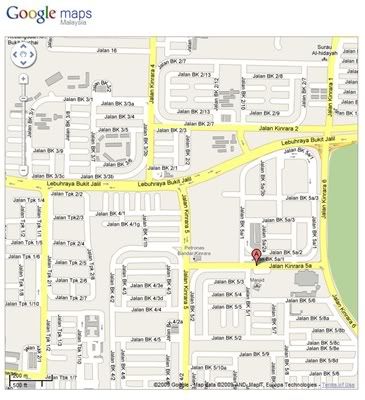
school's address:
SMK Seksyen 4 Bandar Kinrara,
Jalan Kinrara 5A,
47180 Puchong,
Selangor.
. Band Library: Liew Yoon Zhao
. Asst. Band Library: Lee Jian Han , Gan Fang Kai
. Instruments: Hua Pei Tze
. Supply Coordinator: Chong Han Wen
. Bandkeeper: Yap Hui Peng
. Band Library: Liew Yoon Zhao
. Asst. Band Library: Lee Jian Han , Gan Fang Kai
. Instruments: Hua Pei Tze
. Supply Coordinator: Chong Han Wen
. Bandkeeper: Yap Hui Peng
【Attention: please make sure you have the software to UNZIP the file you want to download below (7zip, Winzip etc.)】
[Movie-Orchestra]
#2 Swing Girls
Tracklisting
01. Take a train ride
02. A列車で行こう(TAKE THE A TRAIN)
03. Through the window
04. Falling in Blue
05. Platanus Garden
06. Keep on going,Girls!
07. Stay away from me
08. ♪ swing talk 1
09. 故郷の空(COMIN THROUGH THE RYE)
10. メイク・ハー・マイン(MAKE HER MINE)
11. イン・ザ・ムード(IN THE MOOD)
12. That’s what it is!
13. Reminding Sorrows
14. A列車で行こう(TAKE THE A TRAIN)(Snowy ver.)
15. ♪ swing talk 2
16. ムーンライト・セレナーデ(MOONLIGHT SERENADE)
17. メキシカン・フライヤー(MEXICAN FLYER)
18. シング・シング・シング(SING SING SING)
19. ♪ swing talk 3
20. この素晴らしき世界(WHAT A WONDERFUL WORLD)
21. ♪ swing talk 4[Bonus Tracks]
22. 失恋してもラヴィン・ユー[Bonus Tracks]
Swing Girls (スウィングガールズ, Suwingu Gāruzu?) is a 2004 comedy film co-written and directed by the Japanese filmmaker Shinobu Yaguchi about the efforts of a group of high school girls to form a jazz band.
Swing Girls is set in rural Yamagata prefecture, in northern Japan and the characters often use the local Yamagata-ben dialect for comic effect.
The film ranked 8th at the Japanese box office in 2004, and won seven prizes at the 2005 Japanese Academy Awards, including 'Most Popular Film' and 'Newcomer of the Year' awards for Yuta Hiraoka and Juri Ueno.
The cast includes Yuta Hiraoka (Takuo, the leader of the band), Juri Ueno (Tomoko), Shihori Kanjiya (Yoshie), Yuika Motokariya (Sekiguchi) and Yukari Toyashima (Naomi). The actors performed their own music for the film.
This film was not particularly popular outside of Japan, but was released onto DVD in region 4 format after its release in Japan.
Plot
The movie begins at a school in Japan. It is extremely hot outside, and summer classes are being held. One class is the remedial math class, containing thirteen girls and a nervous, unsocial teacher named Ozawa. While Ozawa rambles on, one of the girls, Tomoko, looks outside the window to see the school's brass band, featuring one depressed Nakamura, planning on giving the teacher a "quitting the band" slip, but unable to follow through. The brass band leaves for a baseball game, and moments later, a lunch truck arrives. The driver notices he is late and is also late for a catering. Tomoko, wanting to get the heck out of math class, decides to deliver the lunches with the others for him.
On the train ride over, Tomoko pops a lunch open and the girls eat it. They also fall asleep and miss their stop. They decide to walk, losing some of the lunches in the fields when dodging a train and from procrastinating at a nearby stream. They meet Nakamura at the stadium and pass out the lunches. When they finish, Nakamura demands to know where his lunch was, and Tomoko says she doesn't know. Nakamura then discovers a speck of rice on Tomoko's chin. He says nothing, and buys his own lunch as the girls leave. As he eats, he notices that his fellow band members are sick since the lunches spoiled in the summer heat. All 42 of them along with their teacher go to the hospital. That night, Tomoko watches it all on the news and is petrified.
The next day, hoping for a miracle, Nakamura holds an audition for new recruits. He gets two punk rockers who need to "make some noise" after their band broke up and a shy, bright, unsocial girl named Sekiguchi, who only knows how to play the recorder. Now Nakamura is desperate, and all that changes when he hears the Tomoko and the other girls outside. His desperation turns to rage and he stomps out into the hall and startles the girls. He berates them because they messed up the lunches. He also tells them that they must fill in for the brass band. The girls try to refuse, but Nakamura threatens to rat them out if they don't join. To escape math class the girls reluctantly join.
The girls start to clown around with the instruments, except for Sekiguchi. Nakamura has no control over them, until Sekiguchi accidentally knocks over some big band records. One rolls down the hall into the hands of the school's star baseball player, who hates Nakamura. While being confronted, Nakamura realizes that he can turn the girls into a big band instead as they are 8 people short of a brass band. As he introduces the concept to the girls, he also realizes that teaching brass band instruments to these 16 girls will not be easy, especially if it needs to be done in time for the game next week. Later on, Nakamura, alone in the band room, realizes that everyone is dependent on the girls, and that if he quits the band now, the people would be disappointed and the baseball player would come after him, so he tears up the "quitting the band" slip.
As the week rolls on, Nakamura trains them physically to improve their lung strength. Everyone stumbles along, except for Sekiguchi, who strolls through the tasks with flying colors. Tomoko faces some conflicts with Nakamura along the way, but she realizes that in order to escape trouble, she must get along with him.
On the day before the game, the girls run through a jazz piece and are pretty good at it, although a little squeaky in some places. As they marvel at their work, all 42 brass band members walk in and take over again. Everyone except Sekiguchi is eager to get out, but once the girls step out of the building, they break down into tears because they realize that they liked playing in a big band.
When school starts up again, Tomoko passes by the band room as the band members run through scales. She asks the band teacher what happen to Nakamura, and she tells her he finally quit. The band teacher offers Tomoko a chance to play, and she begins to accept, but as she enters the room she sees Sekiguchi. Remembering how cruelly she treated her back when the band was still in business, Tomoko leaves. She sells her computer and her little sister's PS2 to buy a used sax (in poor condition). A while later all the girls meet to discuss how to raise some money to buy new instruments. Some ideas are brought up but they are unfeasible, and despite the fact that Nakamura's family is well to do, he can't pitch in because he's afraid he'll get a beating from his parents. Finally they settle on an idea: they decide to get jobs.
The girls work at a supermarket, and raise a lot of money, but Tomoko loses most of the money when she has to pay damages from accidentally starting a fire. As the girls leave, a shocking secret is discovered when it is learned that everyone except Tomoko, her best friend Yoshie, Sekiguchi, and Naomi have spent all of their hard-earned money on designer clothes. The girls who spent their money on clothes run off with the school's baseball players leaving the four with a small amount of money to continue the band on their own.
The foursome (plus Nakamura) decide to pick Luxury mushrooms (matsutake mushrooms) in the mountains. When they get to the mountains, though, they realize that there is a trespassing fine, and that the forest rangers are heading in their direction. They try to escape, but a hungry boar attacks them and goes for the portly Naomi. She climbs up a tree hoping to escape the boar and then falls down onto the boar's head. The boar's skull splits open, killing it on impact. The forest rangers find them, and what seemed like another failure is turned around when they were rewarded a huge sum of money for killing a crop-damaging boar.
They buy the instruments, but they turn out to be broken and old, so now they have to fix them, but they have already blown their money getting the instruments. However, the punk rockers take them to the junkyard to have their ex-bandmates—also ex-boyfriends who are desperate to get them back—to fix them up. Now that they have the gear, they can start playing, but their skills are as poor as their instruments, and after trying a few places to play, they are not very successful.
Later, through a series of mishaps, they find that the math teacher Ozawa is a jazz fan and a sax player.
They play in front of the supermarket they got fired from. The other girls that had previously left see this, and are so moved that they go and sell their designer clothers to buy instruments to rejoin the band, restoring the band to its original size.
Later on in the winter, Tomoko tells the others about a winter music festival where they could actually prove themselves. They all agree to go and convince Ozawa to conduct. He reluctantly agrees, and the next day they go to the roof of the school to record the audition tape. When they finish, they leave Tomoko in charge of sending the tape, with plenty of time to spare; however, Tomoko forgets to send it. She hastily turns it in but a few weeks later she gets a reply saying that due to a surplus in applications, they've been rejected. Crushed, Tomoko decides not to tell anyone.
During a hair appointment, Nakamura discovers that Ozawa is not really a professional sax player and was privately taking lessons. Embarrassed, Ozawa confessed that he was never a good sax player and only learned to play to impress the school's music teacher. He makes Nakamura swear that he will never tell a soul. He also decides to back out of conducting.
On the train ride to the music festival, Tomoko sits alone in another car. Nakamura decides to go over and cheer her up. While the others think it's a confession of love, she says to him that she did not have the heart to tell anyone, so Nakamura tells them for her, which crushes their spirit. To make matters worse, the train is delayed by the snow. The band teacher finds them and rushes them by bus to the auditorium; they have a spot since another band could not make the competition.
They spill out onto the stage just as the announcer declares they would not attend, causing the audience much amusement. They set up and play a 15-minute concert. While wooing the crowd, Ozawa conducts and the punks' boyfriends try to get them to notice them. At the end, the performance turns out to be a success.
Music
The song played by the band for their audition tape was "In the Mood" by the Glenn Miller Orchestra.
The first song played at the concert finale is "Moonlight Serenade" by Glenn Miller.
The second song played is "Mexican Flyer" by Ken Woodman. The song is also featured in Space Channel 5, which Tomoko's little sister was playing earlier in the movie.
The final song played is "Sing Sing Sing with a Swing" by Louis Prima.
Many of the girls really could not play these instruments[1] , and they did play the performances in the film, after training for only 5 months[2]. To prove this was not movie-magic, a tour was organized after the film with a live CD released shortly after.[3]




 junior band!
 mini orchestra!